Non-graphic · Sensitive events discussed without explicit detail.
May 15, 1972: The shooting that ended George Wallace’s campaign ascent
On May 15, 1972, Alabama governor and Democratic presidential candidate George Wallace was shot during a campaign stop in Laurel, Maryland, by Arthur Bremer. Wallace survived but was permanently paralyzed, and Bremer was convicted and imprisoned.
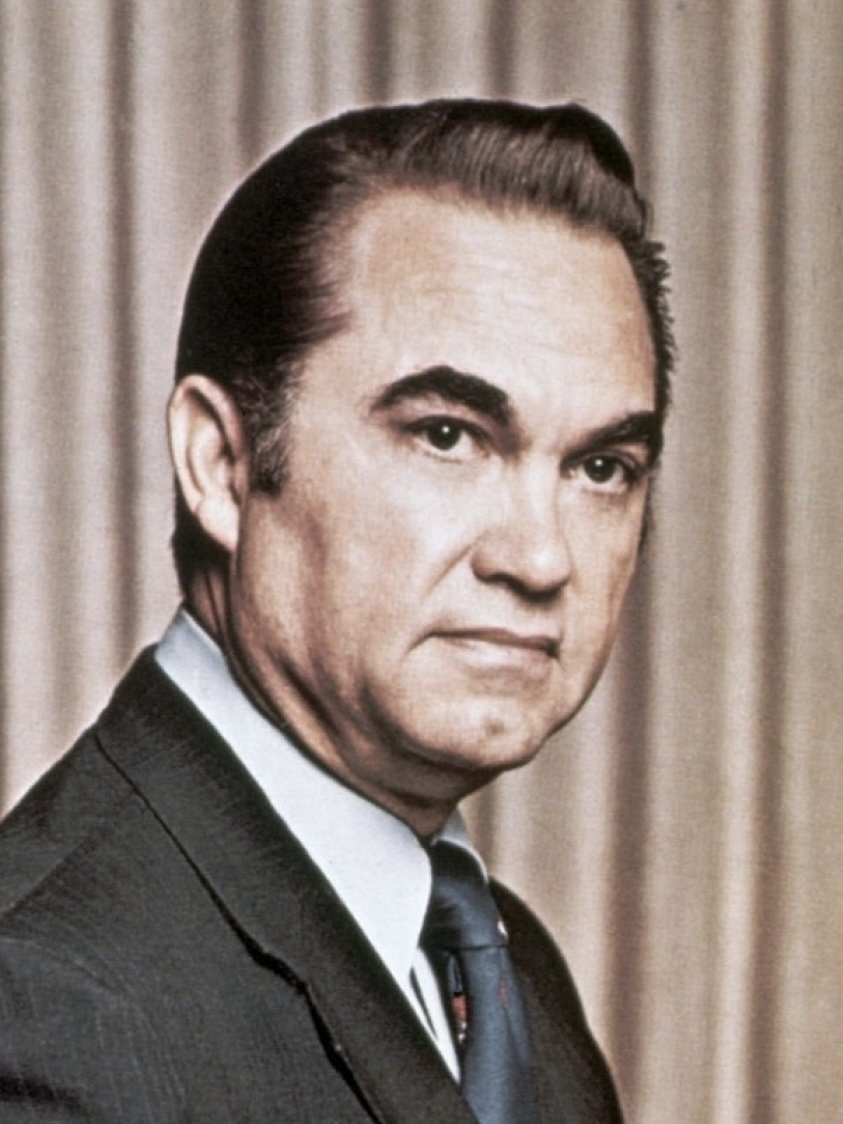
George WallaceState of Alabama via Wikimedia CommonsImage sourceGeorge Wallace assassination attempt, Laurel, MarylandCBS News image via Wikipedia file pageImage source
The shooting of George Wallace was both an attempted assassination and a turning point in a bitter presidential campaign shaped by civil-rights backlash. A campaign-rally attack in Laurel, Maryland, ended Wallace's 1972 run as a serious national force while leaving unresolved questions about how to remember a politician whose later appeals for forgiveness never erased the harm of his segregationist politics.
On May 15, 1972, Alabama governor and Democratic presidential candidate George Wallace was shot during an outdoor campaign rally at the Laurel Shopping Center in Laurel, Maryland. Sources identify the shooter as Arthur Bremer, who was 21 at the time.
Arthur Bremer was convicted for the shooting of Wallace and three bystanders and imprisoned for decades before his later release. Because the main biographical source has maintenance warnings, public copy should keep this to basic legal-status context and avoid unnecessary personal detail.
The attack is historically inseparable from Wallace's civil-rights record: he had built national power through segregationist politics, later renounced segregation and sought forgiveness, and remains a contested figure in civil-rights memory.
Wallace survived but was permanently paralyzed from the waist down, and three other people were wounded. The shooting effectively ended his 1972 presidential campaign as a serious active effort, even though he won the Maryland and Michigan Democratic primaries the next day while hospitalized.
Also on this day
Japan’s May 15 Incident (1932) — 1932-05-15
Young naval officers assassinated Japanese prime minister Inukai Tsuyoshi during a failed coup attempt. The event is included as political assassination and coup violence, not a conventional U.S. true-crime case.
Source: Wikipedia
People’s Park ‘Bloody Thursday’ (1969) — 1969-05-15
Police and sheriff’s deputies confronted protesters near People’s Park in Berkeley; James Rector was killed and many others were injured. Treat as public-order and state-violence history with restrained wording.
Source: Wikipedia
Jackson State Killings (1970) — 1970-05-15
Police opened fire near a Jackson State College dormitory, killing Phillip Lafayette Gibbs and James Earl Green and injuring twelve others. Later investigations criticized the gunfire as unjustified overreaction.
A hostage crisis at a school in Ma’alot, Israel, ended with the deaths of student hostages and other civilians. Use a non-graphic summary and keep the focus on the source-checked outline.
Source: Wikipedia
Donna Payant Murdered at Green Haven Correctional Facility (1981) — 1981-05-15
Corrections officer Donna Payant was murdered at Green Haven Correctional Facility; Lemuel Smith was convicted in a case that drew national attention to prison safety. Because the source has living-person sourcing cautions, keep this brief and factual.
Source: Wikipedia
Help improve this issue
Corrections, source leads, and feedback are reviewed as leads before anything is treated as fact.
Diane Bernard, "How a Failed Assassination Attempt Pushed George Wallace to Reconsider His Segregationist Views," Smithsonian Magazine, accessed 2026-05-13.

.jpg)